REVIEW · BOHOL
Bohol: SUSTAINABLE Mangrove Tunnels & Firefly Kayaking trail
Book on GetYourGuide →Operated by Kayakasia Philippines · Bookable on GetYourGuide
Fireflies glow after silent kayaking. On Bohol’s Abatan River, you paddle through narrow mangrove tunnels and shaded forest channels, then watch synchronous fireflies light up the water in sync. It’s an eco-adventure run with local guides who explain how this river system works and why it needs protecting.
Two things I really like: the no-motor, quiet kayak time in places bigger boats can’t reach, and the home-cooked Filipino dinner after you’re done paddling. If you’re lucky with the evening conditions, the firefly show feels genuinely otherworldly, not just a quick stop-and-snap photo moment.
One thing to plan for: this is outdoors and it’s on the water, so you’ll want to be ready for getting damp and for evening insects. Bring insect repellent, pack a change of clothes, and dress for real kayaking weather.
In This Review
- Key highlights you’ll feel right away
- Bohol’s Abatan River mangroves: what you’re really kayaking through
- Pickup, drive time, and what to expect when you arrive
- The afternoon paddle: mangrove tunnels, nipa palms, and wildlife time
- What might surprise you
- Snack break and staying comfortable on the river
- Sunset to night: firefly watching in synchronous glow
- Timing and conditions
- Dinner afterward: home-cooked Filipino food that doesn’t feel like an add-on
- Sustainability that shows up in how the tour is run
- Price and value: is $85 worth it in Bohol terms?
- Who should book this Abatan River mangrove and firefly kayaking tour
- Practical tips so you enjoy the night (not just endure it)
- Should you book this tour?
- FAQ
- How long is the Abatan River mangrove tunnels and firefly kayaking tour?
- Where can you get picked up for this tour?
- Is the tour beginner-friendly if I’ve never kayaked before?
- What’s included besides kayaking?
- What will I see during the daytime portion?
- What exactly happens during the firefly part of the tour?
- What should I bring with me?
- What’s not allowed during the experience?
Key highlights you’ll feel right away
- Mangrove tunnels you can’t access by motorboat: tight waterways where you paddle slowly through mangrove roots and shaded channels.
- Synchronous fireflies at dusk: a true night-quiet moment, with the glow reflecting on the calm river surface.
- Beginner-friendly instruction: a safety briefing plus basic kayaking coaching so you’re not guessing.
- Local guides who talk conservation, not just sights: you learn how mangroves support wildlife and help protect communities.
- Home-cooked dinner built from fresh local ingredients: a proper meal after your paddling effort.
- Relaxed, peaceful pacing: snack breaks and slow exploration make the 5-ish hour experience feel unhurried.
Bohol’s Abatan River mangroves: what you’re really kayaking through
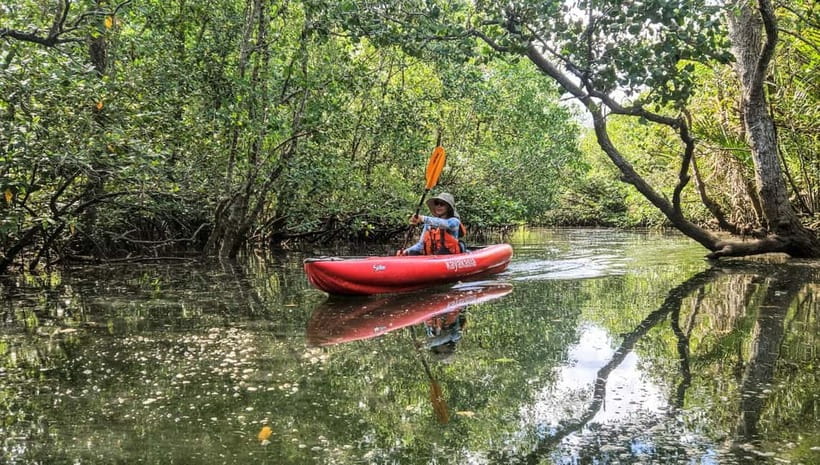
This tour is built around one idea: the Abatan River mangroves are alive in a way that’s easiest to understand when you’re moving slowly and quietly. On a kayak, you don’t blast through the water. You glide. That matters because mangrove roots and flooded forest edges are where the river’s “stuff” happens—nursery areas for marine life, shelter for wildlife, and habitat for birds.
You’ll paddle through a mix of mangrove areas and nipa palm groves, plus flooded channels and narrow waterways. In real terms, that means your route constantly changes. One section feels like a tunnel of green. Another opens into wider, calmer stretches where you can look for birds and wildlife from the water. And because the guide is with you the whole time, the scenery doesn’t stay just scenery. You learn what you’re seeing and why it’s worth protecting.
I also like that the experience is positioned as conservation-focused. You’re not just consuming nature. You’re participating in a system that supports local families who live beside the river and work to keep the ecosystem healthy.
You can also read our reviews of more tours and experiences in Bohol.
Pickup, drive time, and what to expect when you arrive
Most days start with pickup from your area, typically Panglao, Tagbilaran City, or Loboc. Travel time depends on where you’re staying—about 15 minutes from Tagbilaran, and roughly one hour from Panglao or Loboc—so it’s not the kind of trip where you lose most of your day stuck in transit.
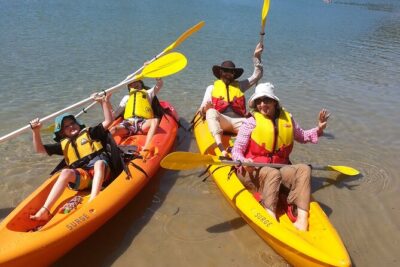
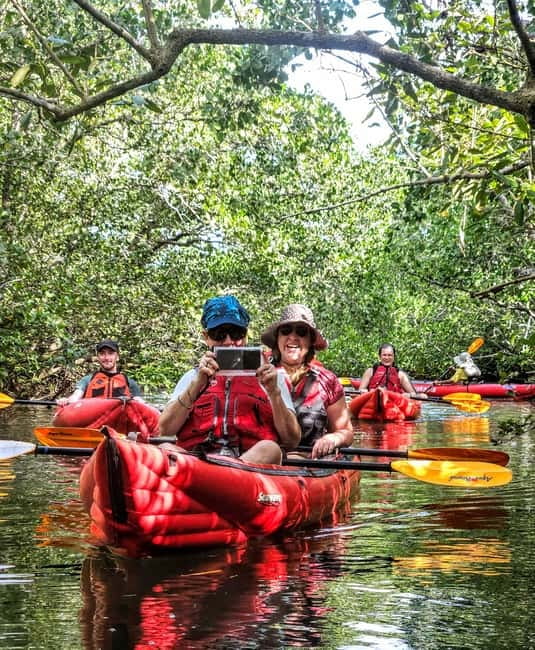
Once you reach the river base, you get a safety briefing and a quick kayaking lesson. This is key. Even if you’ve never held a paddle before, you get the basics before heading out into the mangrove tunnels. You’re also provided with life jackets and the necessary kayaking equipment, and the guide stays with you throughout.
This is also an English-language guided experience, so you can actually ask questions and understand the conservation and ecology talk instead of nodding politely.
One small practical note: plan your clothing and bags assuming you might get wet. You’re kayaking on an active river system, and you’ll be outside for a long stretch. Bring what you need to be comfortable, not just what looks good.
The afternoon paddle: mangrove tunnels, nipa palms, and wildlife time
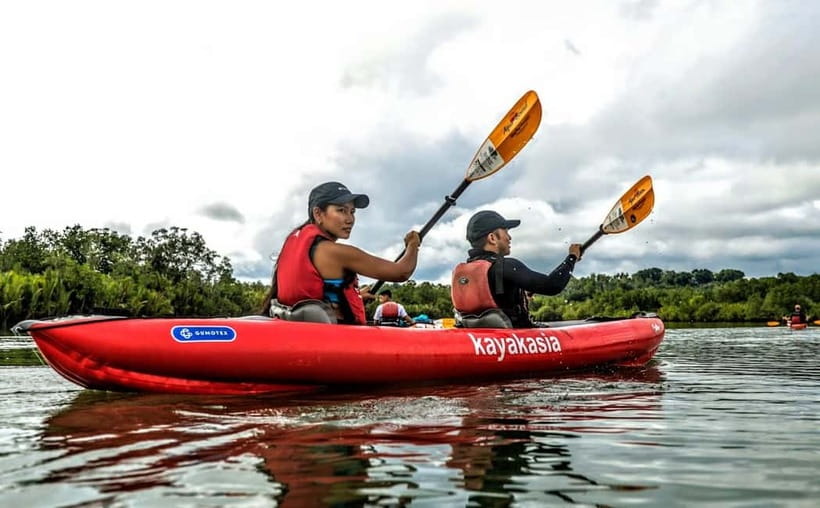
Your first real on-water segment focuses on getting you into the rhythm—gentle paddling, narrow channels, and guided observation. You move through mangrove tunnels and forest channels that are described as hidden waterways only accessible by kayak. This is one of the best parts of the whole experience because it’s exactly the kind of access that makes kayaking worth the effort.
During the daytime portion, you’re not rushing. You’re there to look closely. The guides share stories and explanations about the river ecosystem—how mangroves function, how the river supports marine life, and how local communities depend on it. You’ll also have chances for wildlife viewing and marine life viewing from the water.
From the guide style, you’ll likely get a mix of practical ecology and real-world conservation. Guides like Jeremy and Vince are specifically praised for being informative and passionate about protecting mangroves and fireflies. Another guide name you may hear in this team is Kuya MacMac, known in feedback for being helpful and sharing details about both the mangroves and the challenges they face.
What might surprise you
Two pleasant surprises show up in the experience notes you provided:
- You may spot birds more often than you expect. One review called out a lot of bird sightings during the mangrove kayaking.
- Weather can shift quickly. One person reported seeing all kinds of Philippine weather, and even enjoyed the downpour more than expected. So don’t treat rain as a disaster plan—treat it like a normal part of being outside in Bohol.
If you like calm nature moments with a guide who actually talks through what you’re seeing, this daytime paddle is where you’ll get the most “I get it now” feeling.
Snack break and staying comfortable on the river
Between paddling sessions, there’s a short stop for light local snacks and refreshments at the river station. It’s not just a sugar break; it helps you reset so the evening portion doesn’t feel like a slog.
This pause also gives you time to:
- regroup if you’re tired from paddling,
- drink some water,
- and swap out anything that feels uncomfortable before dusk.
It’s a small part of the schedule, but it makes the pacing better. You get to enjoy nature without feeling like you’re being dragged along from point to point.
Sunset to night: firefly watching in synchronous glow
As the light fades, the mood changes. The river becomes quieter, and the guides lead you back out for the firefly watching. This part is built around synchronous fireflies, which blink in harmony. The experience notes are clear: they’re found only in a few places in the world, and in this abundance they’re described as being in the Philippines.
Why this is special: synchronized blinking turns ordinary wildlife viewing into something with rhythm. Instead of random flickers, you’re watching coordinated light patterns—plus, with the river surface calm, you get reflections that amplify the effect. It’s the kind of moment where you stop thinking about photos and just watch.
It also helps that this tour uses the kayak approach. Reviews you shared contrast this with motorboat-style firefly tours by pointing out that kayaking can be a more sustainable, less disruptive way to observe. If sustainability matters to you, this is one of the clearest reasons to choose this specific format.
Timing and conditions
You can’t control the sky, of course. One review explicitly noted the fireflies under clear skies as magical, which is a good reminder to bring patience and good expectations. Even if the weather isn’t perfect, you’ll still have the experience of paddling under stars and watching the ecosystem’s night phase unfold—just be ready for variable conditions.
Dinner afterward: home-cooked Filipino food that doesn’t feel like an add-on
After the paddling and night watching, you return to base for a home-cooked Filipino dinner made with fresh, locally-sourced ingredients. This isn’t described as a small snack disguised as dinner. One reviewer called it a 3-course meal, and multiple reviews emphasized that it was both delicious and generous.
This matters for value. Kayaking is active—your body will want something warm and filling after the evening chill. Dinner here is positioned as part of the full experience, not a quick stop on the way to something else.
Even better: because the meal is local and home-cooked, it feels tied to the community rather than imported as a generic tour-circuit buffet.
If you’ve eaten tourist food in Bohol before, this dinner is often the moment that changes your opinion of the whole day.
Sustainability that shows up in how the tour is run
The sustainable angle isn’t just marketing language here. The experience is described as supporting sustainable tourism and local livelihoods, working with local residents and environmental stewards dedicated to protecting the Abatan’s mangrove ecosystems.
What you’ll likely notice on the water:
- The guides talk about ecology and conservation while you paddle, so the “why” is part of the show.
- The kayak route reduces noise and helps keep disturbance low compared to bigger motorized boats.
- The tour discourages damaging behavior on the ecosystem, including rules like not touching plants and not littering.
One review also mentioned the team producing and selling upcycled items made from old kayaks and related materials. That’s an extra sign that the organization thinks about waste reduction, not only conservation talks.
If your travel style includes choosing experiences where you can explain where your money goes, this one gives you enough structure to feel that connection.
Price and value: is $85 worth it in Bohol terms?
At $85 per person for an approximately half-day to evening experience, you’re paying for more than “a kayak + a night walk.”
Here’s what that price covers based on your tour details:
- Round-trip transfers from Panglao, Tagbilaran City, or Loboc areas
- Guided kayaking through mangrove tunnels and forest channels
- Afternoon and sunset paddling with expert local guides
- Firefly watching experience at night
- Life jackets and all necessary kayaking equipment
- Light local snacks
- A home-cooked Filipino dinner
- Safety briefing and basic kayaking instruction (beginner-friendly)
- Conservation and community insights from local partners
- English-speaking guide support
In other words, you’re paying for staff time, gear, transport, food, and specialized night observation—under conservation-focused operations. If you were to line up those pieces separately (transport to the river base, kayak rentals, a guide, snacks, dinner, and a firefly session), the total would usually climb fast.
So the real question isn’t just the number. It’s whether you value:
- quiet kayak access to mangroves,
- a guided ecology story,
- and a firefly viewing moment that’s treated as an ecosystem event, not a quick photo stop.
If that sounds like you, $85 feels like a fair deal for what you’re getting.
Who should book this Abatan River mangrove and firefly kayaking tour
This is a great match if you want a mix of:
- nature + conservation education,
- an active but not extreme activity (kayak paddling),
- and a night highlight that isn’t just standing in a crowd.
It’s also shown as family-friendly in your feedback, with one review mentioning kids ages 7 and 10 having a fantastic time. Beginners are supported through the safety briefing and basic instruction.
You might want to choose a different style if you:
- hate getting damp or wet,
- need perfectly predictable weather,
- or want a purely sedentary wildlife tour with minimal physical effort.
If you’re flexible and you pack smart, you’ll likely come away with that rare combo: peaceful time on the water plus a light show you’ll remember.
Practical tips so you enjoy the night (not just endure it)
Bring the gear your tour prompts, because it’s the difference between comfortable and miserable:
- Sun hat (day paddling gets bright)
- Change of clothes (even a small amount of spray matters)
- Sunscreen and water
- Insect repellent (especially for evening)
- Outdoor clothing that’s fine to get wet
- A camera (you’ll want to capture the glow, and you may be surprised how fast the moment happens)
Also watch the rules: no smoking, no littering, and don’t touch plants.
Finally, keep your expectations simple. You’re watching wildlife in a living ecosystem. You’re not controlling the river, the insects, or the sky. But you are getting a guide-led experience designed around that reality.
Should you book this tour?
Yes—if you want a kayak-first Bohol experience that combines mangrove education, quiet nature access, and synchronous firefly watching, this is an easy pick. The pairing of daytime paddling in the mangroves with a night session on the same river system creates a full arc to the evening, and the dinner afterward makes it feel like a complete local experience.
Book if:
- you’re open to outdoor conditions,
- you like guided explanations,
- and you care about how tourism can be less disruptive to wildlife.
Skip or reconsider if:
- you’re very sensitive to wet weather,
- you expect a guaranteed firefly show regardless of conditions,
- or you want something purely low-effort and indoor.
If you match the first set of needs, this one is worth your time in Bohol.
FAQ
How long is the Abatan River mangrove tunnels and firefly kayaking tour?
The experience is listed as lasting about 5 hours.
Where can you get picked up for this tour?
Round-trip transfers are offered from accommodations in Panglao, Tagbilaran City, or Loboc.
Is the tour beginner-friendly if I’ve never kayaked before?
Yes. You’ll get a safety briefing and basic kayaking instruction, and the tour is described as beginner-friendly.
What’s included besides kayaking?
You’ll also get snacks, a home-cooked Filipino dinner, firefly watching, life jackets and kayaking equipment, and guided support throughout the tour.
What will I see during the daytime portion?
You’ll kayak through mangrove tunnels and forest channels with scenic views, plus opportunities for marine life and wildlife viewing.
What exactly happens during the firefly part of the tour?
As twilight descends, you’ll go firefly watching and observe synchronous fireflies under the stars.
What should I bring with me?
Bring a sun hat, change of clothes, sunscreen, water, insect repellent, and outdoor clothing suitable for kayaking.
What’s not allowed during the experience?
Smoking, littering, and touching plants are not allowed.