REVIEW · KETCHIKAN
Ketchikan Kayak Eco-Tour
Book on Viator →Operated by Ketchikan Kayak Company · Bookable on Viator
If you like wildlife and learning as you go, this tour fits. In Clover Pass, you paddle through the meeting point of the Tongass rainforest and the sea, with guides who slow things down to show what’s happening up close. Two big wins for me are the small-group feel (max 12, 6:1 guide ratio) and the focus on tide-life—think sea stars and urchins right along the shoreline—not just spotting animals from far away.
One thing to plan for: your route and timing can shift with weather and wildlife. When sea lions are feeding or humpbacks show up, the guides may adjust where you paddle and how long you linger—great when it clicks, but it can mean more waiting if wildlife movement is slow.
In This Review
- Key highlights I’d prioritize
- Clover Pass kayaking for first-timers: stable kayaks and patient pacing
- The Tongass meets the sea: tide-pool critters are the secret star
- Sea lions, humpbacks, and bald eagles: how the route really works
- The 4-hour dock-to-dock rhythm: what your day feels like
- Meeting points and timing: the red-sign detail that saves time
- Downtown cruise ship pickup
- Ward Cove pickup (Mill at Ward Cove)
- Price and value: why $125 can feel fair (or not)
- What to wear and bring: fit inside the kayak matters
- Should you book this Ketchikan kayak eco-tour?
- FAQ
- How long is the kayak tour?
- Do I need kayaking experience?
- Where do they pick up cruise ship passengers?
- Is rain gear provided?
- Is swimming allowed during the tour?
- Are there age or size limits?
Key highlights I’d prioritize
- Clover Pass ecology, explained in plain English: northern rain forest right at the waterline
- Tide-pool viewing built into the route: sea stars, urchins, sea cucumbers, limpets, chitons, nudibranchs
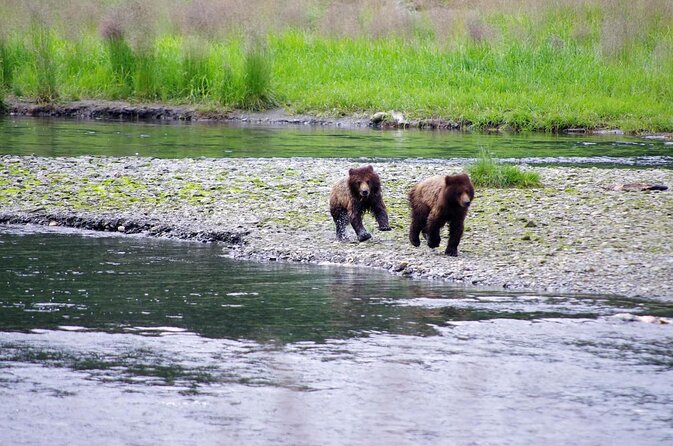
- Wildlife sightings that drive the itinerary: bald eagles, sea lions, seals, and sometimes humpback whales
- Two guides with you: better for safety, paddling help, and split-the-group flexibility
- A real break on the water: 2–2.5 hours paddling inside a 4-hour dock-to-dock plan
- What you get after paddling matters: hot and cold refreshments plus a local smoked salmon snack
Clover Pass kayaking for first-timers: stable kayaks and patient pacing
This is not a try-to-win-a-race kayak tour. The whole setup is geared for people who may be new to kayaking, while still keeping it active enough to feel like you did something outdoors.
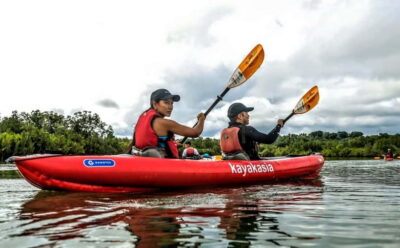
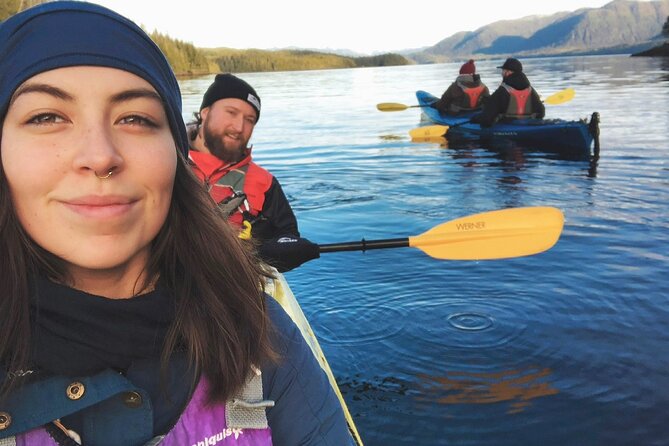
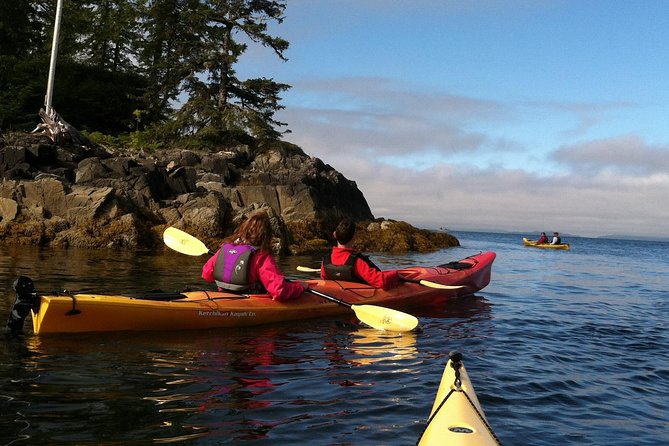
You’ll paddle tandem sit-inside kayaks, chosen for stability and roominess, and you’ll get a quick lesson before you head out. The guides don’t rush the experience into a strict checklist. Instead, they pace the group around conditions—wind, chop, and where the animals are doing their thing—so you’re not constantly fighting your kayak just to keep up.
A practical note: you won’t be swimming on this tour. That reduces risk and helps keep the focus on wildlife viewing and shoreline ecology rather than getting distracted by getting in and out of the water.
If your goal is an Alaska nature day that feels more like guided exploration than a workout class, this matches that perfectly.
You can also read our reviews of more tours and experiences in Ketchikan.
The Tongass meets the sea: tide-pool critters are the secret star
Most wildlife tours show you the animals. This one also shows you the “ecosystem you can’t see from shore.”
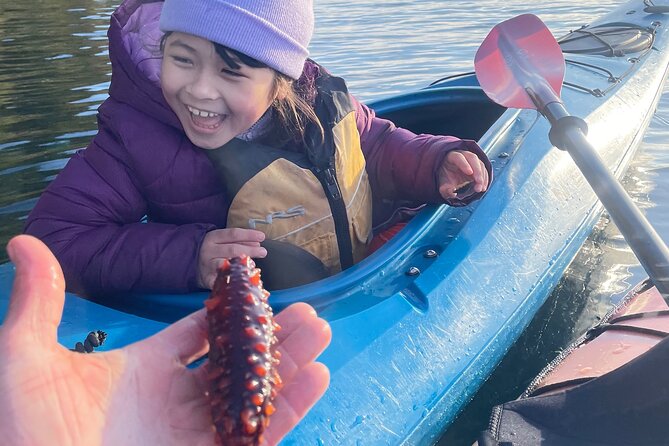
In Clover Pass, the shoreline and rocky edges are full of inter-tidal life. When the tide is right, you can spot plenty of creatures living in the ebb and flow—things like sea stars and urchins, plus sea cucumbers, limpets, chitons, and even nudibranchs. The best part is that the guides don’t just point. They slow down long enough for you to study what you’re seeing, snap photos, and understand how the critters survive in that shifting zone.
Why this matters for you: when the wildlife in the distance is quiet, you still have plenty to watch right under your camera strap. That’s one of the reasons this tour earns such strong repeat-praise. You’re not relying on whales showing up on command.
Also, rain gear is part of the plan here. Ketchikan weather is what it is, and the tour is designed to keep you comfortable while you focus on the biology and the scenery.
Sea lions, humpbacks, and bald eagles: how the route really works
Here’s the reality: wildlife runs the schedule.
Your typical paddling route centers on Clover Pass and can include up to three small islands per tour, depending on weather and what’s out there. Often, one stop features a small island with a large bald eagle nest, where eaglets are present during summer. Watching the cycle—eagles around the nest, and fledglings growing—adds a deeper layer to the wildlife spotting than just seeing a bird fly overhead.
But the big “wow” moments usually come when the animals set the pace.
- If sea lions are feeding, the guides often position you so you can watch them closely from the kayak. Several guides are praised for getting people very near sea lions while maintaining safety and respectful distance.
- If humpback whales show up, you may paddle differently and linger longer, because these aren’t quick sightings. The tour is flexible enough to adjust in real time.
- Eagles and seals show up as part of the broader mix, so even on a day without whales, you’re not stuck scanning the horizon for one jackpot animal.
The upside of this approach is obvious: it turns the tour into real wildlife time. The downside is also real: you might feel like the paddling distance is shorter than you expected if the guides spend more time in one productive spot waiting for behavior to unfold. In a best-case scenario, it feels thrilling. In a slower-wildlife scenario, it can feel like waiting.
Either way, it stays an eco-tour with interpretation, not just a “look there” photo sprint.
The 4-hour dock-to-dock rhythm: what your day feels like
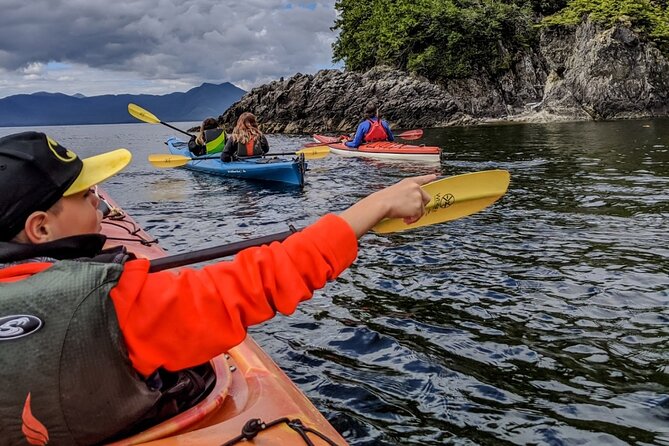
Plan for about 4 hours total dock-to-dock, with roughly 2 to 2.5 hours on the water for most groups. The rest is setup, transportation, and the post-paddle snack and drink time.
It usually flows like this:
1) Pickup and ride to the water
You’re collected from the cruise docks (downtown or Ward Cove, depending on where your ship is docked) and transported to the put-in area. Private transportation is provided, and the setup is designed to reduce stress right after you step off the ship.
2) Gear up for Ketchikan rain
You’ll be fitted with provided rain pants and jackets if you need them. You’ll also get a quick paddle lesson so you can handle the basics—then you’re off.
3) Paddling with two guides, small-group energy
Eco-tours are limited to 12 guests per departure with a 6:1 guide-to-guest ratio, and there are typically two guides in the mix. Sometimes the group stays together. Other times the tour splits into two smaller groups on the water. That keeps things flexible when there are animals in more than one direction.
4) Return snacks: hot or cold, plus local smoked salmon
When you’re done, you’re not left to wander hungry. Hot and cold refreshments are included, along with a local smoked salmon snack. It’s a nice reset, especially if you got splashed or stayed in wet clothing longer than you expected.
One small comfort note from the real world: you may get a bit wet even with rain gear, usually because kayak water spray happens. Bring layers you don’t mind getting damp, and you’ll feel fine.
Meeting points and timing: the red-sign detail that saves time
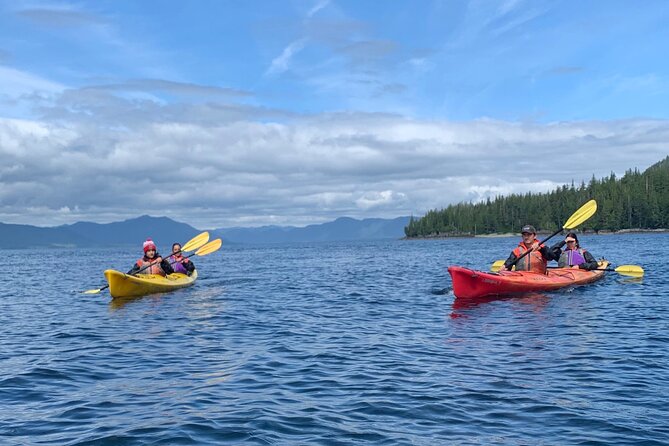
This is one of those tours where meeting location matters more than you’d think, because there are multiple docks and similar-looking ports.
Downtown cruise ship pickup
After you disembark, head to the shelter at Cruise Berth 3—next to the Visitors Information restrooms and Sockeye Sam’s Store, across the street from the tunnel. Your driver will be there early, holding a RED sign that says KETCHIKAN KAYAK CO.
Ward Cove pickup (Mill at Ward Cove)
If you’re docked at The Mill at Ward Cove, go through the building to the right. Look in the corner near restrooms and the large overhead door for the driver with the RED sign.
If your ship docks at Ward Cove, there’s a timing quirk: pickups are typically 15–20 minutes after the scheduled downtown departure time, and you’ll usually be back about 15 minutes early. For example, if you booked an 8:00am to noon tour, operations might run roughly 8:15–11:45.
Practical tip: before you leave your ship, double-check which berth you’re actually at and read the meeting instructions all the way through. One wrong pier can cost you your whole morning.
Price and value: why $125 can feel fair (or not)
At $125 per person for about 4 hours, this isn’t a budget add-on. But it also isn’t priced like a premium private charter.
Here’s what you’re paying for that makes the value easier to justify:
- Small groups: max 12 and a 6:1 guide ratio means more hands-on help and more time spent actually viewing wildlife.
- Two guides: helps with safety, paddling coaching, and group flexibility when wildlife moves.
- Provided rain gear: that’s a real cost saver in a wet place.
- Pickup and drop-off: cruise port logistics can be annoying; this tour handles it.
- Food and drinks: hot/cold refreshments plus a local smoked salmon snack reduces the “end of tour hunger tax.”
Where the price may feel less worth it: if you’re expecting long-distance paddling every minute, your experience will depend on where the animals are. Some days are built around waiting for whale or sea lion activity to peak.
Still, when the wildlife lines up—and it often does—this is one of the more complete ways to spend a half-day in Ketchikan. You get paddling, interpretation, and a good physical pacing without turning it into a grind.
What to wear and bring: fit inside the kayak matters
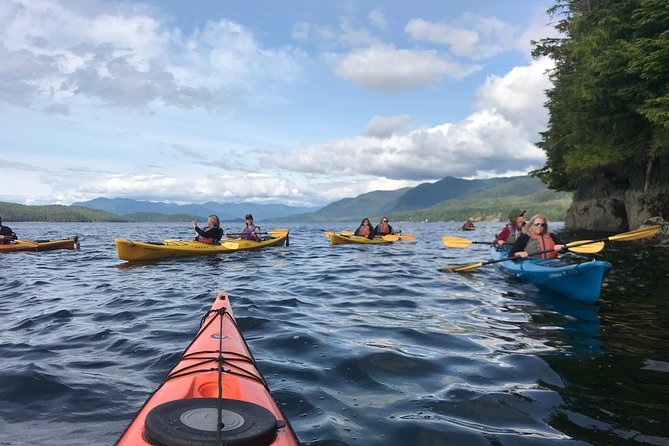
You’re provided rain pants and jackets, so you don’t have to outfit yourself like you’re climbing a mountain. But you still want to dress like you’re going on an outdoor hike.
What to wear:
- clothing suited for an outdoor hike through forest conditions
- footwear that will fit inside the kayak (bulky boots or high heels aren’t recommended)
What to watch for:
- due to cockpit opening size, your hip/waist size should not exceed 52 inches (137 cm) as measured while seated
Children:
- children must be accompanied by an adult
- children must be at least 6 years old (some exceptions may be possible—call to check)
And one more practical detail: this tour is offered in English, and confirmation is received at booking time. A mobile ticket is used as well.
If you’re comfortable with light planning (what pier you’re meeting at, and whether your shoes fit your kayak), your day should stay smooth.
Should you book this Ketchikan kayak eco-tour?
I’d book it if:
- you want a wildlife-focused kayak day in a protected waterway like Clover Pass
- you care about learning what you’re seeing, especially tide-pool life
- you like the idea of small groups and a guide-to-you ratio that supports safety and real viewing time
- you’re okay with the route shifting based on wildlife behavior
I’d think twice if:
- you expect guaranteed humpbacks or whales on your schedule, no matter what
- you get restless waiting around while wildlife activity catches up
- you want lots of long-distance paddling regardless of where animals are
If your sweet spot is nature viewing with real interpretation, plus a comfortable rain-ready setup, this tour is a strong way to spend a half-day in Ketchikan.
FAQ
How long is the kayak tour?
The total experience runs about 4 hours dock-to-dock. Most groups spend around 2 to 2.5 hours on the water.
Do I need kayaking experience?
No experience is necessary. You’ll get a quick lesson before heading out.
Where do they pick up cruise ship passengers?
Pickup is offered at Downtown Cruise Docks & Ward Cove Cruise Ship Docks. Downtown pickup is at Cruise Berth 3 (near Visitors Information restrooms and Sockeye Sam’s Store). Ward Cove pickup is at The Mill at Ward Cove.
Is rain gear provided?
Yes. Rain pants and jackets are provided.
Is swimming allowed during the tour?
No. Swimming is not part of this tour.
Are there age or size limits?
Children must be accompanied by an adult and must be at least 6 years old (exceptions may exist—call to check). There is also a hip/waist measurement limit: it should not exceed 52 inches (137 cm) while seated due to kayak cockpit openings.