REVIEW · LOS ANGELES
LA River Eco Tour and Secret Stair Hike
Book on Viator →Operated by See LA in a Day · Bookable on Viator
The LA River has stories you can walk. This 3-hour eco walk blends river history, transit clues, and Echo Park hill views—plus the kind of local trivia that makes you see Los Angeles differently. I especially like how the tour connects what’s happening now along the river to how LA got here (and what’s planned next).
Two things I genuinely liked: the guide, Chris, who keeps the pace human and the facts clear, and the stair-and-trail portion in Echo Park, where the “secret” feeling is real and the views are worth every step. One thing to consider: this is a 4.4-mile hike with hills and staircases, so if stairs bother you, you’ll need to judge that honestly before booking.
In This Review
- Quick hits before you lace up
- Why the LA River feels like a living map of LA
- Meeting at Lewis MacAdams Riverfront Park and getting the lay of the land
- Stop 1: LA River—history, nature, and the why behind the change
- Stop 2: Lewis MacAdams Riverfront Park—how the fight got real
- Stop 3: Corralitas Red Car Trail—walking where trolley lines went
- Stop 4: Echo Park secret stairs—architecture, occult lore, and giant views
- Stop 5: Elysian Valley—where the $1.6 billion plan is headed
- Stop 6: Spoke—use it as your pre- or post-walk anchor
- Price and pace: is $45 worth it?
- Who this tour is best for (and who should skip it)
- Practical tips so you enjoy the stairs more
- Weather and day-of reality checks
- Should you book the LA River Eco Tour and Secret Stair Hike?
- FAQ
- How long is the LA River Eco Tour and Secret Stair Hike?
- Where is the meeting point?
- How far do you walk and how hard is it?
- How much does the tour cost?
- Is admission included for the stops?
- Is the group small?
- What happens if the weather is poor or you need to cancel?
Quick hits before you lace up
- Small group (max 10): easier conversation and a more flexible feel on the walk
- Echo Park secret stairs: forgotten paths and a payoff view over the LA River and Eastside
- Trolley past via Corralitas Red Car Trail: a physical walk through what LA lost in transit
- River transformation story: you’ll connect today’s access to a long fight by locals
- Reasonable price for a 3-hour guided loop: $45 includes the ride of learning (and the stops don’t charge extra)
Why the LA River feels like a living map of LA
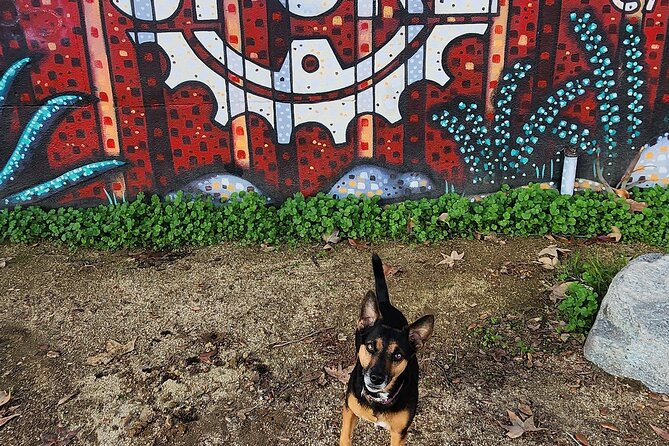
Most people think of the LA River as a backdrop for movies or a weird concrete channel you drive past. This tour treats it like what it is: a major waterway that’s shaped neighborhoods, transportation, and community effort over decades.
What makes it interesting is how the story moves in layers. You’re not just hearing dates—you’re seeing geography, routes, and modern changes. By the end, you start noticing details like where the river is being made more walkable and why certain sections feel “in-between” compared to the streets around them.
And yes, it’s also a practical tour. The river corridor is one of the easiest places in Los Angeles to build in low-key time—walking, bike rides, even bird watching—once you know where to go.
You can also read our reviews of more tours and experiences in Los Angeles.


Meeting at Lewis MacAdams Riverfront Park and getting the lay of the land
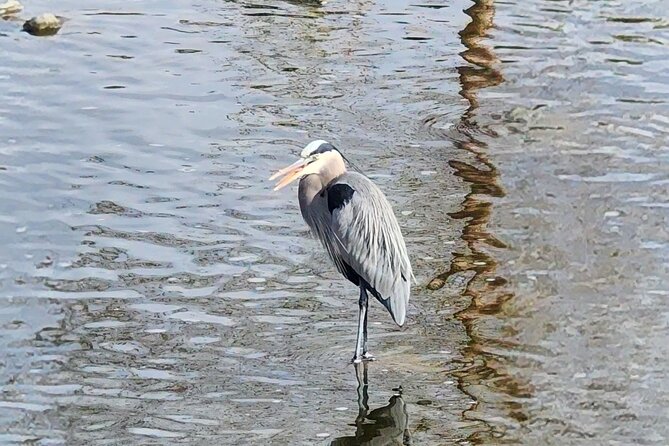
You start at Lewis MacAdams Riverfront Park (formerly Marsh Park) at 2944 Gleneden St, Los Angeles, CA 90039, and you loop back there at the end. The meeting place matters because it anchors the whole theme: access.
You’ll begin by learning how people fought to make the river more usable for normal life. This isn’t the dry kind of history where you just memorize names. You get the mindset behind it—people cutting through barriers, then pushing until the Friends of the LA River Organization grew into a serious force for change.
This early context is useful. Once you understand that the river didn’t always feel walkable, later stops make more sense. You won’t just see paths; you’ll understand why those paths exist.
Stop 1: LA River—history, nature, and the why behind the change
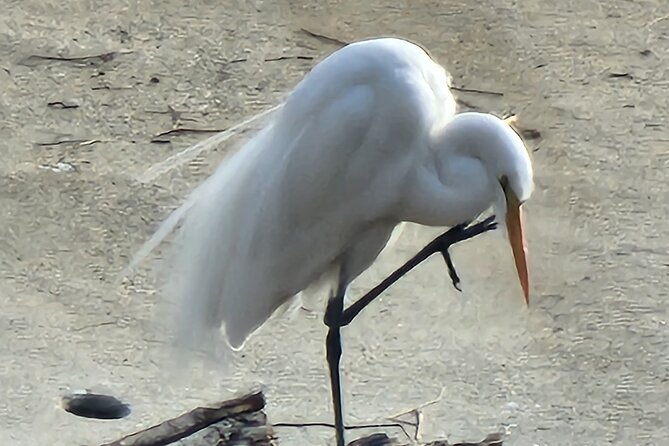
This is the core setting, and the tour’s goal here is big: past, present, and future of the LA River. It’s more than scenic walking. You’re learning why this waterway matters to the city’s ecology, neighborhoods, and long-term planning.
Even if you’re not a history person, I think you’ll like how the guide points out the river’s “two realities” at once. On one side you’ve got the river as an engineered system. On the other side you’ve got the river as a living corridor with wildlife and room for recreation.
Timing-wise, this part gives you about an hour. That length is perfect because it lets you move without rushing, while still keeping enough energy for the later hill work.
A simple benefit: you’ll finish stop 1 knowing where people typically bike, where you can grab a bite nearby, and where you might spot birds if you’re paying attention. That kind of local direction is the stuff that pays off after the tour is over.
Stop 2: Lewis MacAdams Riverfront Park—how the fight got real
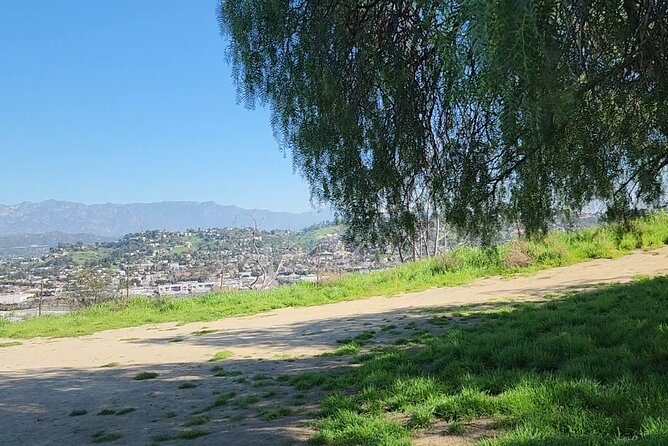
At this park area, the story shifts from the river as a concept to the river as a community project. You learn about the people who worked to make the river accessible, starting with a very DIY spark—a pair of wire cutters and a rock n roll mindset—and then turning that energy into something organized and lasting.
The important part here isn’t the drama for drama’s sake. It’s understanding the timeline of how “public space” gets made in Los Angeles. If you’ve ever felt like the city is always behind on basic access, this stop helps explain why the river became a place where locals pushed hard.
This portion is shorter—about 25 minutes—so it’s not a long lecture. Think of it as a reset moment. You take a breath, you get the bigger picture, and then you’re ready for the transit-era history that comes next.
Stop 3: Corralitas Red Car Trail—walking where trolley lines went
Here’s where the tour gets fun and unexpected. LA used to have great public transportation. Walking the Corralitas Red Car Trail, you move along an abandoned stretch of old trolley-car lines and learn what happened to one of the world’s best transportation systems.
This stop is quick—around 20 minutes—but it lands because it’s visual. You’re not just hearing that transit changed. You’re seeing the corridor and imagining the life that used to pass through it.
Why I like this part: it connects city history to something physical. Many tours stay trapped in photographs and timelines. Here, the trail shape is doing half the teaching.
If you love rail history, urban planning, or even just how cities evolve, this is a highlight.
Stop 4: Echo Park secret stairs—architecture, occult lore, and giant views
Echo Park is where the hike really takes off. You’ll climb into the hills using secret stairs and forgotten paths, which means you’re not just doing a straight uphill grind. The route feels like a scavenger hunt through older parts of the neighborhood.
Along the way, you’ll pass beautiful early 1900s architecture, then work toward views that can include big-name LA landmarks like the Hollywood Sign and the Griffith Observatory. That’s the payoff. You earn the sight, and the city looks different from up here because the river corridor becomes part of the scene.
The tour also touches a darker, more local layer of Echo Park history. The hills provided seclusion for occult organizations and self-sustaining religious compounds. You don’t get sensationalism—you get context for why these hills mattered and why access to certain areas changed over time.
And yes, the “secret” part continues. The stairs, hills, and trails lead to a secret swing with a view over the LA River and LA’s Eastside. It’s a small moment, but it’s the kind of moment that makes the whole tour feel like more than a history walk.
This segment is about 45 minutes, and it’s the part most likely to test your legs. But it’s also the part most likely to put that smile on your face when you catch the view.
Stop 5: Elysian Valley—where the $1.6 billion plan is headed
After the hill effort, the final stretch brings you back toward the LA River. This is where the tour turns future-focused, with a clear sense of what’s changing and what’s planned.
In the Elysian Valley section, you’ll see where new restaurants, shops, spas, apartments, and pocket parks are starting to pop up. The point isn’t to treat the river like a trend. It’s to show how Los Angeles is thinking big about revitalizing and renaturalizing the river with a $1.6 billion plan.
That number matters because it signals something real: this isn’t just painting and signage. It’s an attempt to reshape how the river fits into daily life. You’ll also hear the idea that the river will look very different decades from now, compared with what you can see today.
If you’re the type who likes to travel with your eyes open, this stop gives you a “future lens” to carry forward. You’ll start noticing development patterns near the river and you’ll understand why the focus stays on making the corridor more accessible.
Stop 6: Spoke—use it as your pre- or post-walk anchor
You’ll end at Spoke, one of LA’s good spots for breakfast or lunch. This is practical timing, because after 3 hours of walking (including stairs), you’ll appreciate an easy meal right after.
It’s also a useful add-on for planning. You can rent a bike here and spend more time along the river, using what you learned during the tour to pick a direction. Even if you don’t rent a bike, simply having a known food stop nearby reduces the post-tour scramble.
This part is about 15 minutes, so it’s not a long break. Think of it as a transition: energy in, energy out.
Price and pace: is $45 worth it?
At $45 per person for about 3 hours, this is a fair price for a guided walk that combines city history, transit lore, and a real workout. The big value is the structure: you’re not just wandering. You’re walking with Chris as your guide and getting a narrative that makes each area click.
Also, admission is effectively handled as part of the experience. Every stop listed is admission ticket free, and you’ll just focus on the walking and learning.
Pace-wise, plan for a moderate physical level. You’re covering 4.4 miles with hills and staircases. The tour is designed for people who can move on uneven terrain and climb repeatedly. It’s not a casual stroll, even though the total time is only a few hours.
Finally, the group size tops out at 10. That makes a difference on a route like this—less crowding, more chances to ask questions, and a more human flow through the tight stair sections.
Who this tour is best for (and who should skip it)
This tour fits best if you:
- want a local-feeling LA experience focused on one corridor
- like history that’s tied to what you can actually see
- don’t mind stairs and hills, and you can walk several miles
- enjoy a guide who mixes facts with humor and keeps energy up
I’d be cautious if you:
- have trouble with staircases or frequent uphill walking
- want a flat, easy route
- get worn out quickly by uneven terrain
The good news is that the route gives you motivation. Echo Park’s views and the swing moment help your brain justify the climb.
Practical tips so you enjoy the stairs more
A few smart moves will make this way more fun:
- Wear supportive shoes. You’ll be on stairs and hills, not just sidewalk walking.
- Bring water. Three hours is enough time for dehydration to sneak up, especially if the weather is warm.
- If you hate stairs, plan a conservative pace. You can’t change the route, but you can control your speed.
- For photos, expect Echo Park to be the strongest payoff. The river-and-city views are the kind you’ll want to linger over.
Also, if you’re relying on public transit, this route is described as near public transportation, so it should be manageable to get to the start area without a car.
Weather and day-of reality checks
This experience is described as weather dependent. You should expect it to operate only when conditions are good. If it’s canceled due to poor weather, you’ll be offered a different date or a full refund.
Start time is 10:00 am, and the tour runs about 3 hours. That timing matters because you’ll be out during the morning-to-midday stretch, often a calmer part of LA for walking than late afternoon.
And because you get a mobile ticket, you can keep everything simple on your phone rather than hunting for paper.
Should you book the LA River Eco Tour and Secret Stair Hike?
If you want the LA River experience that most visitors miss—the one with history, transit ghosts, and a true climb—book it. This is the kind of tour where the city feels like a puzzle you can solve step by step, and where Chris brings the places to life with clear storytelling and humor.
Go for it especially if Echo Park’s hills and viewpoints sound appealing, and if you’re comfortable with 4.4 miles and staircases. If you’re unsure about fitness, be honest with yourself. The route is built for movement, not lingering.
FAQ
How long is the LA River Eco Tour and Secret Stair Hike?
It lasts about 3 hours.
Where is the meeting point?
The tour starts at Lewis MacAdams Riverfront Park (formerly Marsh Park), 2944 Gleneden St, Los Angeles, CA 90039, USA.
How far do you walk and how hard is it?
It’s a 4.4 mile hike over 3 hours, with hills and staircases. Travelers should have a moderate physical fitness level.
How much does the tour cost?
The price is $45.00 per person.
Is admission included for the stops?
Each stop listed has admission ticket free.
Is the group small?
Yes. The tour has a maximum of 10 travelers.
What happens if the weather is poor or you need to cancel?
This experience requires good weather. If it’s canceled due to poor weather, you’ll be offered a different date or a full refund. It also has free cancellation up to 24 hours in advance for a full refund.