REVIEW · SOFIA
Full Day Private Eco Tour in Koprivshtitsa from Sofia
Book on Viator →Operated by Privatour BG · Bookable on Viator
Koprivshtitsa feels frozen in 1876. This full-day private eco tour from Sofia uses hybrid and electric vehicles, then drops you into Bulgaria’s April Uprising heartland for a walk through five National Revival house museums. You also get a guided thread that ties the buildings to the people who tried to change the country.
What I like most is the smooth electric/minibus ride plus WiFi and A/C, so the day doesn’t feel like a slog before the fun starts. I also love the way the route mixes architecture and stories—each house museum is different, so you don’t feel like you’re rushing through the same room five times.
One thing to plan for: lunch isn’t included, and with a packed day (about 8 hours), you’ll have limited time at each stop. If you want to linger, bring that pace mindset up front.
In This Review
- Key things to know before you go
- Electric and Hybrid Ride: Getting to Koprivshtitsa without the hassle
- Price and logistics: does $137.57 feel fair?
- How the 8-hour schedule actually works (and how not to waste it)
- Entering Koprivshtitsa by story: why the April Uprising houses matter
- Oslekov’s House: triple-arched entrance and a merchant’s fate
- Todor Kableshkov House Museum: the birthplace behind the blood letter
- Lyutov House Museum: painted rooms and the wool plasti tradition
- Georgi Benkovski House Museum: a wooden birthplace and the hills around it
- Dimcho Debelyanov House: literature in a National Revival home
- Lunch in Koprivshtitsa: what to plan since it’s not included
- The guide experience: why Svetoslav’s style makes the day click
- Who should book this private eco tour from Sofia
- Should you book this tour?
- FAQ
- How long is the Full Day Private Eco Tour in Koprivshtitsa from Sofia?
- What is the meeting point and start time?
- Is pickup offered?
- What’s included in the price?
- Is lunch included?
- Are the house museum admission tickets included?
- Is this a private tour?
Key things to know before you go
- Hybrid + electric transport for a quieter, more comfortable ride out of Sofia
- Private format means your guide can pace the day for your group
- Entrance tickets included for the house museums on the route
- A guided walk that links cobblestone streets to the April Uprising story
- A lunch stop is planned, but you’ll pay separately
Electric and Hybrid Ride: Getting to Koprivshtitsa without the hassle
The day starts with a pickup from the Old City Center around pl. “Sveti Aleksandar Nevski” 1A in Sofia, with the tour beginning at 9:00 am. Since it’s a private tour, you’re not sharing the schedule with strangers, and you can usually count on a smooth rhythm from door-to-door.
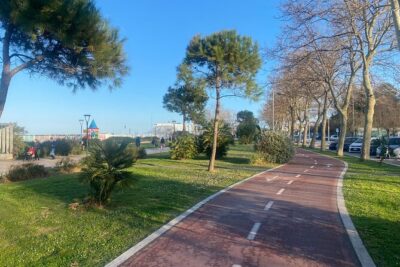
What makes this version feel extra practical is the transport itself. This is an air-conditioned vehicle with WiFi on board, and the operator highlights hybrid and electric vehicles for the journey. Even if you’re used to day trips, the ride matters here: Koprivshtitsa is the kind of place where the morning sets your mood. No one wants a stiff, cranky start before you’re looking at 19th-century houses and trying to absorb what the April Uprising meant.
If you care about getting your bearings fast, this is the format that helps. Your guide keeps the day moving, and the transport back to Sofia is planned, too (about 2 hours driving in the return stretch).
You can also read our reviews of more tours and experiences in Sofia.

Price and logistics: does $137.57 feel fair?
At $137.57 per person, this tour is not the cheapest way to reach Koprivshtitsa. But the value comes from what’s folded into the price and how long you’re actually out there.
Here’s what you get that’s easy to underestimate:
- All fees and taxes are included
- Admission tickets are included for the house museums on the route
- Your day is handled as a full package: pick-up, guided walking route, and the return drive
The only clear extra is lunch, which the plan sets aside as about 1 hour at a local restaurant—you just pay it separately.
So the “fairness” question comes down to whether you want a guide to connect architecture to the April Uprising story, and whether you’d otherwise pay admissions and fight your own timing. If you’re trying to do this independently, you’ll spend energy matching transportation and tickets. Paying for a guide here buys you that mental load back.
How the 8-hour schedule actually works (and how not to waste it)
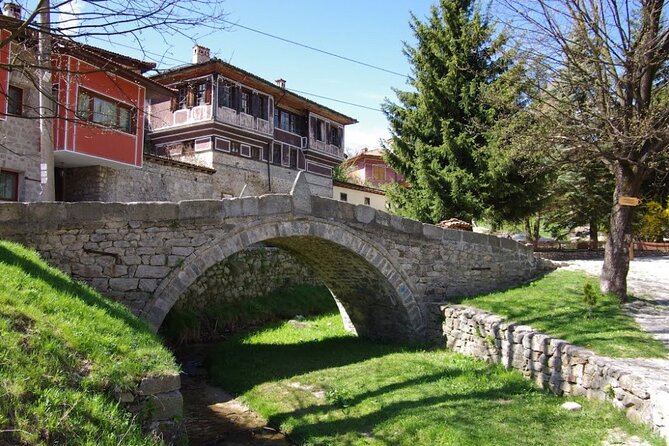
This is an 8-hour day trip built around a guided walk and short museum blocks. You won’t have a lot of time for wandering off the route, and that’s the point: five house museums plus a lunch stop plus the drive.
Your day looks like this in practice:
- Scenic travel to Koprivshtitsa (about 2 hours on the way, framed as a picturesuqe journey in the plan)
- Walking tour through five house museums, with guided time at each stop
- Lunch for 1 hour at a local restaurant (not included)
- Return drive to Sofia (about 2 hours)
Because the stops move fairly quickly (some are listed at 40 minutes each), the best strategy is to treat the day like a guided “course.” You’re sampling, not camping. If you’re the type who loves reading every placard twice, you may feel rushed. If you like a guide’s framing and enjoy seeing a lot without overthinking, you’ll be very happy with the pace.
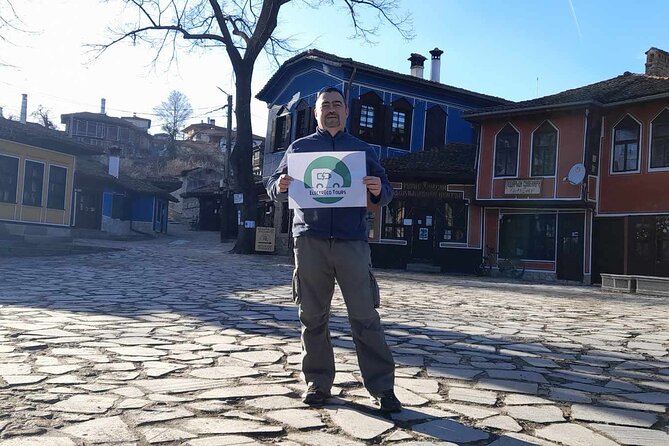
Also note this is a private tour/activity: it’s only your group. That usually makes timing smoother and questions easier, especially when you’re moving between houses on cobblestone streets.
Entering Koprivshtitsa by story: why the April Uprising houses matter
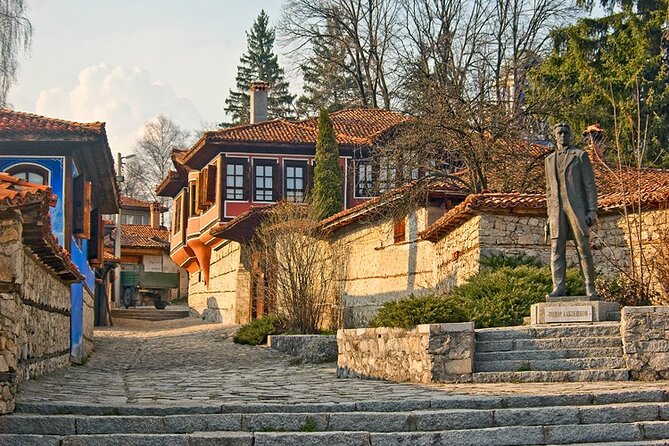
Koprivshtitsa is more than a pretty town on a hill. The houses function like time capsules from Bulgaria’s National Revival era, and the April Uprising ties them together.
What you’ll notice as you move is how each building reflects a different angle:
- Wealth and merchant life
- Literary and revolutionary writing
- Construction details and craftsmanship
- Personal histories of key figures
- How the town itself acted as a stage for national change
Your guide’s job is to keep you from seeing the houses as disconnected museum boxes. Instead, the route gives you a sequence—people, events, and the rooms where those lives played out.
And on a practical level, the guided format keeps you from getting stuck. If you’ve ever wandered through a museum without a narrative thread, you know it can turn into random facts. Here, the tour aims to keep the connections clear.
Oslekov’s House: triple-arched entrance and a merchant’s fate
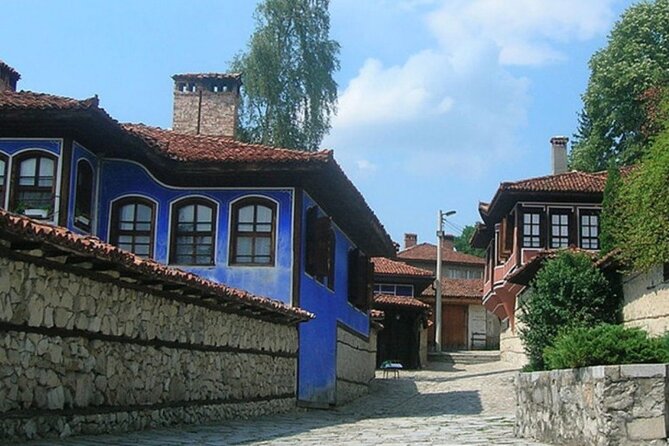
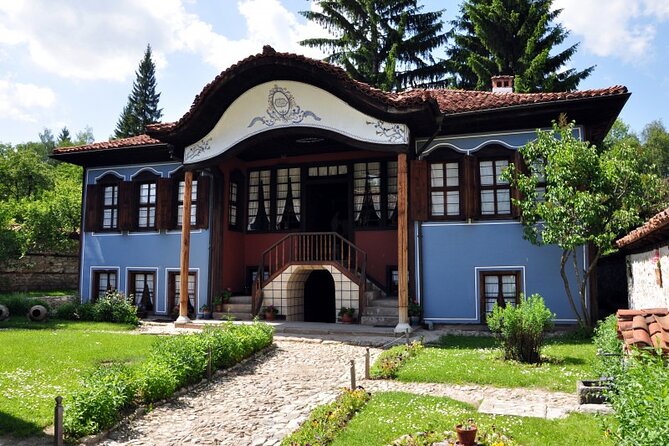
This is the first major stop, and it sets the tone. Oslekov’s House is described as a standout example of Bulgarian National Revival architecture, with a triple-arched entrance and a restored interior painted in colors ranging from scarlet to sapphire blue.
But the emotional weight of this stop comes from the person tied to the building. You’ll learn about the wealthy merchant who lived here and was executed during the 1876 April Uprising. That’s a heavy detail, and it helps explain why these houses aren’t just decorative.
There’s also a practical visitor benefit: the plan notes that informative displays are available in Bulgarian, English, and French. That matters if you want to read and not only listen—especially when you’re standing in a room that has multiple architectural details worth catching.
Time-wise, this stop includes 2 hours (and the plan also describes a walking tour framework that includes visiting the five house museums). Expect this one to be your “anchor” stop: the building that gives you the historical and architectural context for what comes next.
Todor Kableshkov House Museum: the birthplace behind the blood letter
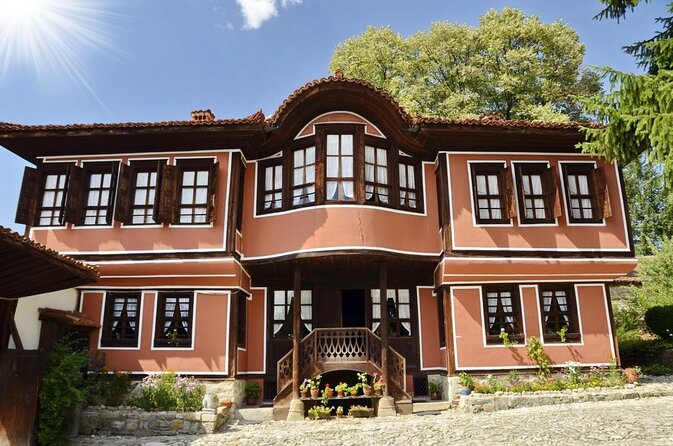
Next is the Todor Kableshkov House Museum, built in 1845 by master-builder Gencho Mladenov. The design is noted as symmetrical, with a spacious second-floor saloon and tall glazed windows. Even if you’re not an architecture nerd, symmetry and light like this tend to make people pause. You can feel the order in the rooms.
The human story is equally specific: this is the birthplace of Todor Kableshkov, author of the infamous blood letter. That phrase can sound like a legend if you only know it from headlines, so it helps to be in the room where his early life started.
This stop is shorter—about 40 minutes—so I recommend focusing on two things while you’re there:
- The architectural features that define the space (doors, carvings, room shape)
- The way the guide connects Kableshkov’s writing to the wider uprising
The house includes detailed woodwork: the plan notes intricate wood carvings on ceilings, doors, and cupboards. Those details are the kind you’ll remember later when you’re thinking about the town’s craftsmanship.
Lyutov House Museum: painted rooms and the wool plasti tradition
If Oslekov’s House gives you the uprising-linked context and Kableshkov adds a specific revolutionary voice, Lyutov House Museum brings you back to what daily life and wealth looked like in that era.
This house was built in 1854 for wealthy citizen Stefan Topalov. You’ll see richly painted walls and curved wood ceilings—again, not just pretty, but built to show status and skill.
One of the most interesting details noted in the plan is the display of plasti, described as handmade colorful covers made from wool. This is the sort of item that helps you picture the household routine beyond the political headlines. Clothes, textures, domestic crafts—these small pieces often make history feel real.
Expect about 40 minutes here. Because it’s a craft and decoration-focused stop, it can be tempting to look everywhere at once. A good move is to let your guide point out what’s worth your time. That way you don’t miss the story behind the object.
Georgi Benkovski House Museum: a wooden birthplace and the hills around it
Now you step into the life of Georgi Benkovski at his birthplace, described as a charming wooden house tucked among Koprivshtitsa’s hills. The setting matters here. Even without trying to guess elevation or distances, you can sense the connection between revolutionary planning and terrain.
This stop centers on Benkovski’s role as a key organizer and leader of the April Uprising. The plan also notes a nearby monument, including a description of a sculpture depicting Benkovski on horseback, galloping toward his dreams—set against the natural beauty of the area.
Time at this stop is also about 40 minutes, so it’s designed to be a strong hit of character and place without draining the day. If you like revolutionary history but don’t want a lecture that lasts all afternoon, this is the balance point on the route.
Dimcho Debelyanov House: literature in a National Revival home
The final house museum on your route is Dimcho Debelyanov House, devoted to Bulgaria’s literary heritage. This historic home is on Dimcho Debelyanov Street, and the focus is on the poet’s life and works.
The plan emphasizes the “ambiance” of a preserved National Revival period house, with exhibits dedicated to Debelyanov. If your brain tends to separate politics from culture, this stop helps you see how the era’s national identity also traveled through writing and art.
Time here is listed as 40 minutes, which gives you just enough time to orient yourself in what you’re seeing and then move on before the schedule tightens.
Lunch in Koprivshtitsa: what to plan since it’s not included
After the museums, you get 1 hour for lunch at a local restaurant. The tour plan is clear that lunch is not included in the price, so you’ll want cash or a card ready.
This timing is smart. You’ve been on a mix of walking and museum time, and that hour gives you a real chance to reset. It’s also your opportunity to try Bulgarian food at your own pace rather than being rushed as part of a scripted meal.
One practical tip: since the houses are spaced out and you’ll be walking cobblestone streets, treat lunch as fuel, not a long event. If you want dessert or a second drink, keep an eye on the clock so you don’t end up sprinting back to the meeting point.
The guide experience: why Svetoslav’s style makes the day click
The strongest praise tied to this tour is how the guide drives the experience. In particular, Svetoslav (often referenced as Sveto) is described as friendly, professional, and genuinely good at making the history make sense.
That matters more than you might expect. Koprivshtitsa’s story is complex: architecture, craftsmanship, personal biographies, and uprising events all mix together. A guide who can connect the dots keeps you from losing the plot when you move from one house to the next.
You’ll also appreciate the “smooth” feel of the day: the transport is described as comfortable and punctual, and the flow is set up so you’re not waiting around with nothing to do. When your driver-guide is confident, the day feels light—even when the schedule is full.
Who should book this private eco tour from Sofia
This tour fits best if you want:
- A guided day in Koprivshtitsa with a clear narrative thread
- An eco-friendly transport option using hybrid/electric vehicles
- Five house museums handled efficiently in one day
- A private setting where your group can move and ask questions at its own pace
It may be less ideal if you want long museum stays or you dislike organized itineraries. With set time windows—especially the roughly 40-minute museum blocks—you’re sampling. You don’t “own” the day in the way you would if you arrived independently and stayed until closing.
Should you book this tour?
I’d book it if you want Koprivshtitsa to feel understandable, not just scenic. You’re getting transport comfort, admissions taken care of, and a guided route that connects buildings to the April Uprising era. For many people, that’s the difference between seeing houses and actually feeling the story.
I’d think twice if lunch plans matter a lot to you and you’d rather control every hour. Since lunch isn’t included, you’ll want to budget for it. And if you’re the type who likes to linger, you might feel slightly rushed by the designed museum timing.
FAQ
How long is the Full Day Private Eco Tour in Koprivshtitsa from Sofia?
The tour runs about 8 hours.
What is the meeting point and start time?
The meeting point is the Old City Center, pl. “Sveti Aleksandar Nevski” 1А, 1504 Sofia, and the tour starts at 9:00 am.
Is pickup offered?
Yes. Pickup is offered.
What’s included in the price?
The tour includes an air-conditioned vehicle, WiFi on board, and all fees and taxes, plus admission tickets for the house museums.
Is lunch included?
No. Lunch is not included, though there is a 1-hour lunch stop at a local restaurant.
Are the house museum admission tickets included?
Yes. Admission tickets are included for the house museums included on the itinerary.
Is this a private tour?
Yes. It’s a private tour/activity, and only your group participates.