REVIEW · BIG ISLAND OF HAWAII
Private Tour: Hawaii Volcanoes National Park Eco Tour
Book on Viator →Operated by Kilauea EcoGuides · Bookable on Viator
Walking the volcano beats a bus ride. This private Hawaii Volcanoes Eco Tour is built around Kilauea up close—steam, sulfur, lava-tube geology, rainforest recovery—guided by people who can turn the park into a living science lesson.
I especially like the way the tour blends volcano science with Hawaiian culture as you move from caldera trails to coastal geology. You also get a true private setup, so the pace and stops can match your group.
One thing to factor in: there’s no hotel pickup, and you should expect some driving between the park stops once you’re meeting inside the national park.
In This Review
- Key highlights you’ll feel right away
- Entering Hawaii Volcanoes National Park like a local
- Volcano House steam vents, rainforest trails, and Chain of Craters orientation
- Nahuku–Thurston Lava Tube: walking through a 500-year-old tunnel
- Halemaumau Trail: caldera views plus plants, birds, and Hawaiian culture
- Steam vents and sulfur banks: when chemistry is the main character
- Kilauea Iki Trail: the 1959 eruption made walkable
- Devastation Trail: Peles tears, olivine, and rainforest recovery
- Keanakako’i Overlook: eruption viewing depends on what the volcano is doing
- Visitor Center and Junior Ranger: a solid break for families
- Holei Sea Arch and Volcano Art Center: finishing with coastal form and history
- Price and logistics: is $160 per person good value?
- Who should book this private eco tour (and who might skip it)
- Should you book this Hawaii Volcanoes National Park Eco Tour?
- FAQ
- How long is the Hawaii Volcanoes National Park Eco Tour?
- Is the Hawaii Volcanoes National Park entrance fee included?
- What’s included in the $160 per person price?
- Do you offer hotel pickup and drop-off?
- Can the tour include active eruption viewing?
- Is the tour truly private?
- What should I bring for the tour?
- What happens if I need to cancel?
Key highlights you’ll feel right away
- Private guide, private route: You stay with your group and get less crowd pressure at the key viewpoints.
- Real lava-tube education: You walk through the Nahuku–Thurston Lava Tube and learn how lava tubes form and what’s inside.
- Steam vents and sulfur banks on foot: Short walks get you right to the geothermal heat and the chemistry story.
- Moon-walk on Kilauea Iki: The trail makes the 1959 eruption feel physical, not just historical.
- Optional eruption viewing: Keanakako’i can deliver active summit views when conditions allow, using binoculars or spotting scopes.
Entering Hawaii Volcanoes National Park like a local
Hawaii Volcanoes National Park is one of those places where the map looks simple, but the terrain is doing its own thing. This tour helps you read it. You start at 1 Crater Rim Drive, inside the park, and your guide sets the day’s rhythm with science, safety, and context.
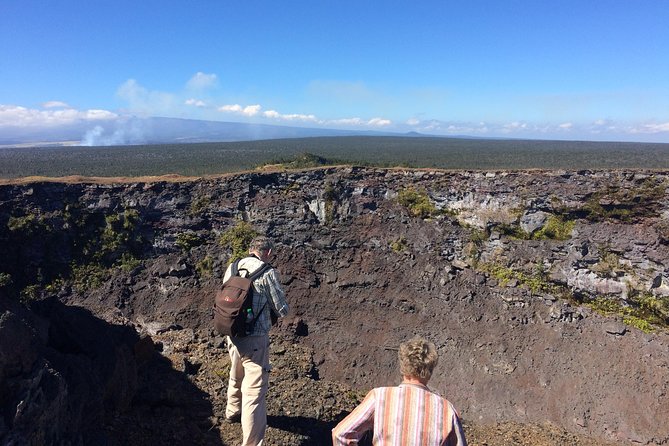
What makes this experience work is that it’s not just point-and-shoot sightseeing. You’re walking through active and semi-active volcanic zones where the ground still explains the story: heat rising from vents, minerals in the sulfur fields, and lava-buried forests turning into geologic clues.
The guides also bring real personality to the day. Names you might meet include Erik, Jay, Michelle, Justin, Chris, Tyson, and more. People mention guides who are funny, geologically trained, and even former park staff—so questions don’t feel like interruptions. They’re part of the program.
And yes, it’s private. That matters here because the best experience at the volcano is often about timing and focus, not just checking boxes.
You can also read our reviews of more tours and experiences in Big Island of Hawaii.

Volcano House steam vents, rainforest trails, and Chain of Craters orientation
Your first stretch is all about getting your bearings. The tour begins at the historic Volcano House area, which sits inside the park. From there you walk toward steam vents and sulfur banks, where the heat and smell are part of the lesson. You’ll feel the geothermal activity instead of reading about it on the drive in.
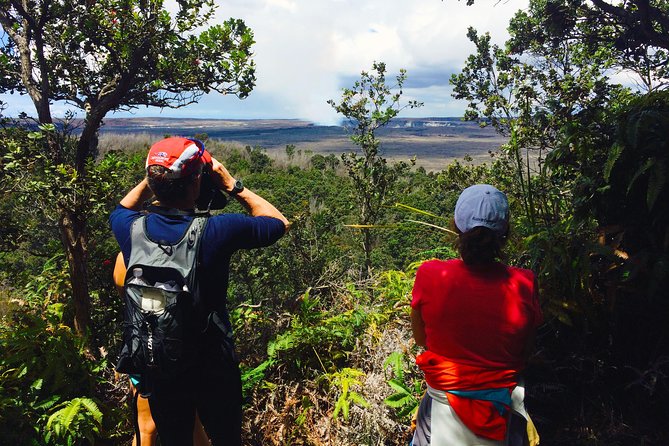
Then comes a native rainforest segment. This is one of the most useful parts of the tour because it shows you recovery and survival—how plants deal with a harsh environment that keeps changing. You also walk through what’s called the Devastation Trail, which is tied to the 1959 lava burial. It’s not long, but it hits hard: you’re walking where the forest used to be, and you’ll look for things like Pele’s tears and olivine crystals as your guide explains what you’re seeing.
The tour also includes time on Chain of Craters Road, guided stops that help you connect the dots between pit craters and Kilauea’s bigger behavior. This is where the park stops being a collection of pull-offs and becomes one connected story.
Why you’ll like this: you get a coherent path through the park, not random walking.
Possible drawback to note: if you’re expecting zero movement between sites, adjust your expectations. This is a road-and-walk day.
Nahuku–Thurston Lava Tube: walking through a 500-year-old tunnel
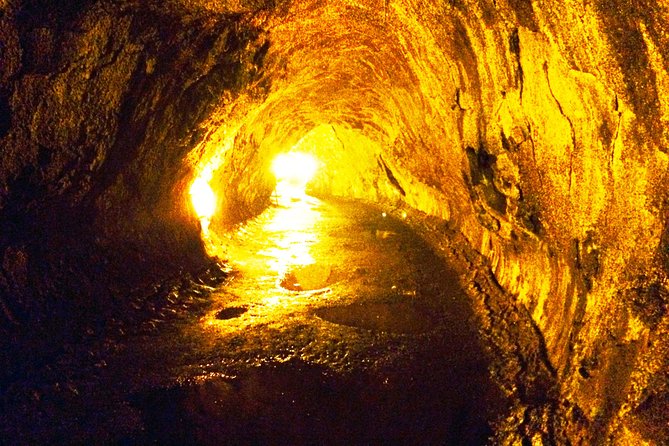
Next up is Nahuku – Thurston Lava Tube, with a walk through a tunnel that’s around 500 years old. Lava tubes form when flowing lava cools on the outside while molten rock keeps traveling inside. Standing in the tube makes that process feel real in your body.
Your guide points out features inside the tube, and you also hike through an old-growth native forest to get there. That combination is great because it gives you contrast: living ecosystem outside, preserved volcanic structure inside.
The time inside the lava tube is short, but the explanation is usually the star here. Even if you’re not a geology person, you’ll likely leave thinking about how volcanoes move water, heat, and time through rock.
Halemaumau Trail: caldera views plus plants, birds, and Hawaiian culture
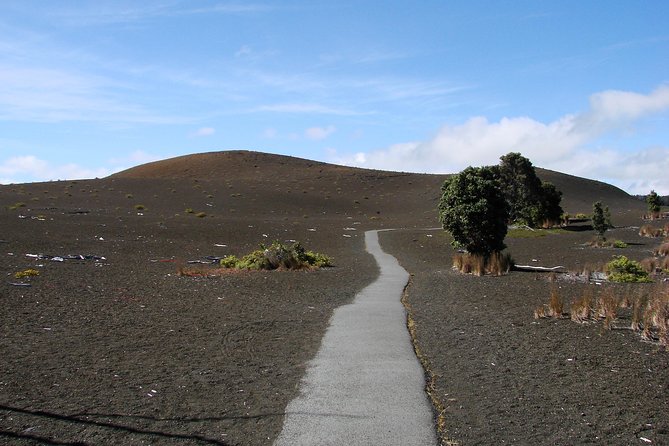
Then you shift to the Halemaumau Trail area. This portion is designed for views—good sightlines toward the summit caldera—plus education along the way. Your guide talks about native plants, native birds, and the geology specific to Hawaii, and it also connects to Hawaiian culture that still lives alongside volcanic activity.
This stop works well even for people who don’t want a long hike that day. It’s brief, but it’s packed with the kind of detail that makes future volcano TV documentaries feel less like entertainment and more like a map you understand.
If you’re traveling with kids, this section also tends to be a good attention-holder: viewpoints, stories, and quick stops.
Steam vents and sulfur banks: when chemistry is the main character
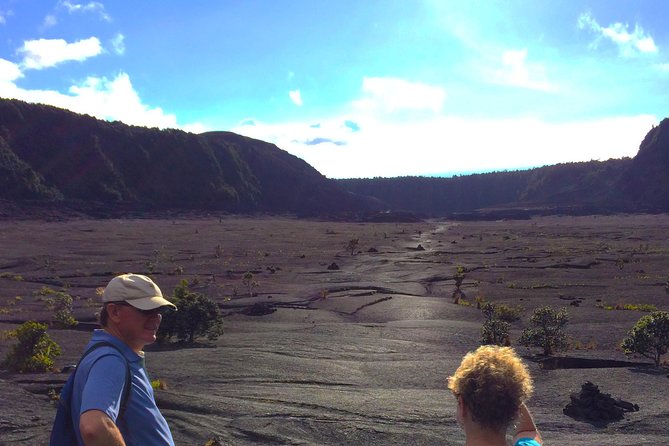
Two short walks—Steam Vents and Sulphur Banks—are among the most memorable parts for many first-time visitors. You get geothermal heat rising from the ground, and your guide explains what’s happening under your feet in terms you can actually use.
You’ll also hear about geochemistry and how native plants can adapt to volcanic gases. Even better, your route here is described as safe due to low gas concentration, which matters because this isn’t just a casual wander. Your guide keeps it practical.
Why this section is valuable: it turns the park’s weirdest sensations (heat, minerals, smell) into something you understand.
Kilauea Iki Trail: the 1959 eruption made walkable
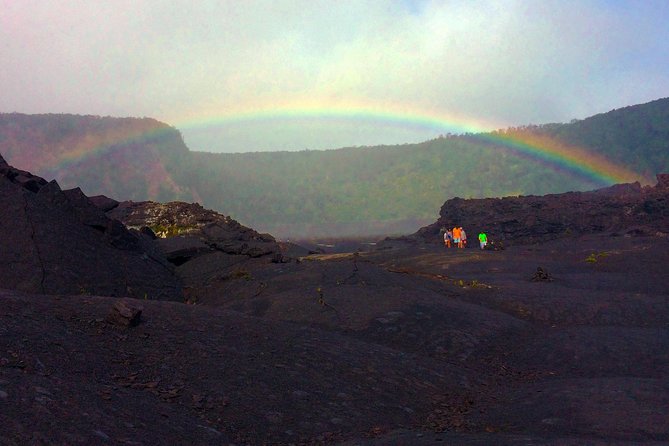
The Kilauea Iki Trail is often the main hike for the day, and it’s not subtle. This is the spot many people associate with feeling like you’re walking on the moon. Your guide ties the route to the 1959 eruption, including its famous lava-fountaining event.
Here’s what I like about this stop conceptually: it’s one of the best places to experience time layers. You’re moving across ground shaped by one major event, and the guide helps you notice how lava, cooling, and later life work together. The volcanic surface becomes a timeline.
This is also where your guide’s style really shows. If your guide is the type who adjusts explanations to your pace (and they often are in private tours), you’ll get a much better experience than following a fixed script.
Devastation Trail: Peles tears, olivine, and rainforest recovery
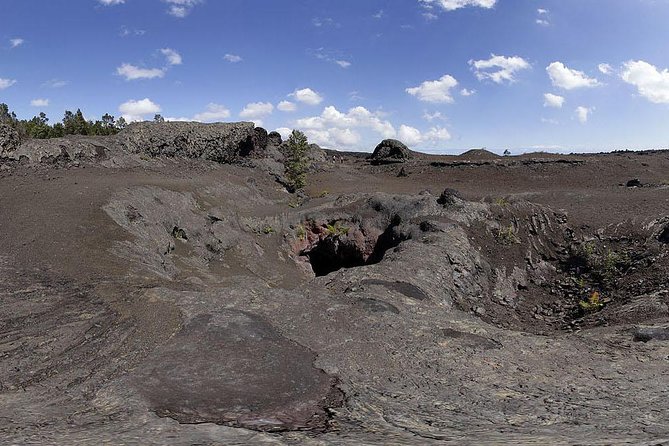
The Devastation Trail is shorter than some other hikes, but it carries emotional and scientific weight. The idea is simple: you’re walking in terrain where the native rainforest was buried in volcanic debris in 1959.
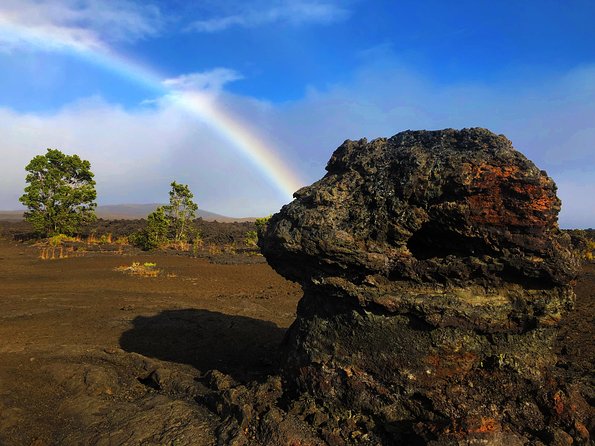
Your guide directs you to features like Pele’s tears and olivine crystals, and explains why they matter. It’s the kind of stop where you’ll start looking at rock the way you normally look at flowers: patterns, texture, and meaning.
If you like photos, this is also a strong segment. The rock formations and plant recovery can create images that look almost unreal—but still grounded in real geology.
Keanakako’i Overlook: eruption viewing depends on what the volcano is doing
One of the biggest “maybe” moments on this tour is the stop at Keanakako’i Overlook. It’s described as a top spot to see the active summit eruption when lava is visible. When it’s happening, your guide helps you make the most of it using binoculars and/or spotting scopes.
This is important: eruption viewing is dependent on current conditions. That means you should treat this as a bonus, not a guarantee. The good news is that the rest of the itinerary is still strong even on calmer days, because the park is teaching geology through heat, rock, and forest.
How I’d plan mentally: assume you’ll learn a lot for sure, and hope you’ll see lava if conditions cooperate.
Visitor Center and Junior Ranger: a solid break for families
At the Kilauea Visitor Center, you can take a short pause if you prefer. There’s a chance to pick up books about volcanoes and Hawaiian culture. If you’re traveling with kids, this is also where Junior Ranger program materials are handled: your guide helps your child complete the program and you end with an official Junior Ranger badge.
Even if you don’t have kids, this short stop can help you reset: water check, quick questions, and a moment to orient yourself before the final stretches.
Holei Sea Arch and Volcano Art Center: finishing with coastal form and history
The tour ends with lighter-feeling stops that still connect to the volcano’s story.
First is Holei Sea Arch, a short, easy coastal walk for photos and a chance to hear about native sea birds. It’s a good change of pace because you shift from caldera geology to coastal volcanic features.
Then you head to the Volcano Art Center Gallery, which also lets you see the original Volcano House Hotel, described as the oldest hotel in the state. That history connection is brief but satisfying, because it links the park’s present-day science to the way people have been fascinated by this place for generations.
Price and logistics: is $160 per person good value?
At $160 per person, this is priced for a private, guide-led day with multiple stops inside Hawaii Volcanoes National Park. The value usually comes from three things:
- You’re buying interpretation, not just movement. The guide’s explanations tie together steam vents, lava tube structure, caldera history, and the 1959 eruption story.
- Private means less wasted time. Your route can better match your group’s pace, and you’re not stuck waiting for other people.
- You’re inside the park early and efficiently. Starting at Crater Rim Drive keeps the day focused.
Two practical costs to keep in mind:
- The National Park entrance fee is not included. It’s $30 per vehicle, so if you’re driving with friends, that can spread out the expense.
- Food and drinks aren’t included unless specified. Some people also note that there isn’t much in the way of lunch inside the park area, so bring snacks. Even if you plan to grab something, count on a snack run more than a real meal plan.
Also, there’s no hotel pickup or drop-off, so you need to handle getting to the meeting point yourself. If you’re staying outside the park area, this matters. On the flip side, meeting inside the park can reduce stress once you’re actually there.
Finally, tour times can be morning or afternoon. After booking, you may need to contact the operator to confirm your preferred departure time.
Who should book this private eco tour (and who might skip it)
This tour is a great fit if:
- You want a walking-and-learning day focused on geology and ecosystem recovery.
- You care about Hawaiian cultural connections and want explanations that aren’t just facts.
- You like flexibility and question-friendly guidance.
- You’re visiting in limited time and want a strong overview without thinking too hard about which stops matter most.
You might choose a different option if:
- You hate any walking at all. This day mixes multiple short hikes and several stops.
- You want a fully hands-off logistics experience with hotel pickup and transportation from your doorstep (this tour doesn’t include it).
- You’re purely looking for drive-by views with minimal time on trails.
Should you book this Hawaii Volcanoes National Park Eco Tour?
Yes—if you want the volcano explained as you experience it, this is one of the smartest ways to spend a half-day or full morning/afternoon on the Big Island. The biggest win is the guide-led pacing: you get to walk the steam vents, tube, caldera trail areas, and the Kilauea Iki story without feeling lost.
Book it when you:
- can meet at 1 Crater Rim Drive on your own,
- bring or plan for snacks and water,
- and treat eruption viewing as a bonus, not a promise.
If that matches your style, you’ll likely leave with the kind of understanding that makes the park feel alive, not random.
FAQ
How long is the Hawaii Volcanoes National Park Eco Tour?
The tour runs about 3 to 6 hours (approx.), depending on timing and conditions.
Is the Hawaii Volcanoes National Park entrance fee included?
No. The park entrance fee ($30/vehicle) is not included.
What’s included in the $160 per person price?
The price includes a professional guide, the private tour, and all taxes, fees, and handling charges.
Do you offer hotel pickup and drop-off?
No. Hotel pickup and drop-off aren’t included, and transportation to/from attractions isn’t provided.
Can the tour include active eruption viewing?
It can include eruption viewing, but it depends on current eruption conditions. The stop at Keanakako’i Overlook is the spot to look, using guide binoculars or spotting scopes when available.
Is the tour truly private?
Yes. It’s listed as a private tour/activity, meaning only your group participates. The maximum per booking is 25 people, and there’s a minimum of 2 people per booking.
What should I bring for the tour?
Bring snacks and water, because food and drinks aren’t included and in-park lunch options aren’t something to count on.
What happens if I need to cancel?
You can cancel up to 24 hours in advance for a full refund.